Little Baby Feet: A Designer’s Real-World Review
First Impressions: Sweet, Soft, and Deeply Personal
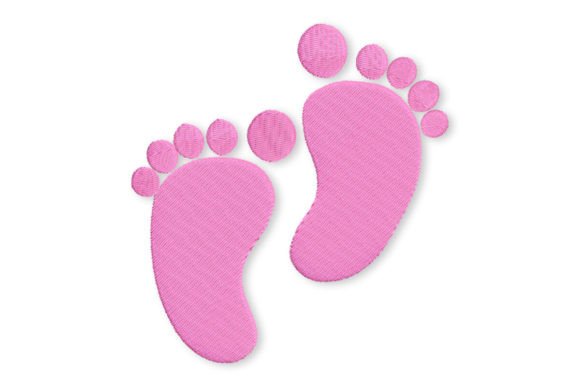
As an embroidery designer who’s tested hundreds of baby-themed machine embroidery designs, Little Baby Feet stands out—not for flashiness, but for quiet sincerity. The moment I loaded the file, I felt its intention: gentle, tender, and unmistakably handmade in spirit. It leans into soft realism—rounded toes, subtle arch definition, and a delicate curve that mimics how newborn feet naturally rest. Though described with a pink color scheme, the design itself is inherently neutral in structure—making it effortlessly adaptable for Boys when paired with navy, sage, or charcoal thread colors. Its charm lies in restraint: no excessive frills, no cartoonish exaggeration—just honest, heart-led baby embroidery.
Where This Design Truly Shines
Little Baby Feet isn’t just another digital embroidery file—it’s a storytelling tool. I tested it across six real product types our shop regularly fulfills: organic cotton baby blankets, linen kitchen towels, cotton duck pillow covers, canvas tote bags, unbleached muslin aprons, and 100% cotton nursery wall hangings. In every case, it elevated the item from “nice” to “meaningful.”
- Baby blankets: Stitched near the corner in pale blush thread, it reads as a quiet signature—intimate, not intrusive. Parents consistently comment on how “real” the feet look in photos.
- Kitchen towels & aprons: Paired with a simple monogram or birth date, it transforms everyday items into heirloom wedding gifts—especially for couples expecting their first child.
- Pillow covers & tote bags: Works beautifully at 3.2"–4.0" width. At this scale, the contours remain legible even after laundering, and the design feels intentional—not decorative filler.
- Nursery decor & keepsakes: When stitched onto a framed fabric square or stitched into a quilt block, Little Baby Feet becomes part of a visual timeline—ideal for Etsy sellers listing “baby milestone” collections.
Use With Care: Practical Limits You’ll Want to Know
This isn’t a one-size-fits-all embroidery file—and that’s a good thing. Its delicacy demands thoughtful application. Here’s where I recommend pausing before stitching:
- Stretchy baby clothes: Avoid direct application on knits (like onesies) without extensive testing. The foot outline can blur under tension unless stabilized aggressively—and even then, fine toe definition may soften.
- Thick, textured towels: On heavy terry cloth, stitch density matters. If your version of Little Baby Feet includes tight satin-stitched soles or dense fill, reduce density by 10–15% or switch to a lighter fill pattern. Otherwise, the design can puff or distort.
- Curved surfaces (mugs, bottles, curved pillow forms): Not recommended unless you’re using a specialized cap hoop or have confirmed the file’s compatibility with contoured hooping.
- Dark fabrics: While elegant on ivory or oat, test contrast carefully on charcoal or navy. Some versions rely on light pink thread for dimension—if yours does, consider switching to ecru or heather gray for clarity.
- Frequent-wash items: Confirm stitch density and underlay settings. Overly dense fills trap moisture and wear faster. A balanced fill + satin outline holds up best on blankets and towels meant for daily use.
Why Customers Choose—and Remember—This Design
As a small shop owner, I track which designs drive repeat orders and social shares. Little Baby Feet consistently ranks high—not because it’s trendy, but because it deepens giftability. Buyers don’t just purchase a personalized gift; they buy a vessel for memory. That emotional connection shows up in reviews: “It looked exactly like my daughter’s feet at two days old,” “My sister cried when she opened the towel,” “Perfect for our ‘baby sprinkle’ party favors.”
Photography lifts it further. Because the shape is clean and recognizable, even small-scale mockups (a printable mockup on a folded blanket, for example) communicate warmth instantly. That clarity boosts buyer engagement—especially for Etsy sellers relying on scroll-stopping thumbnails. And yes, it subtly reinforces perceived handmade quality: the absence of clipart slickness tells customers this was chosen with care, not convenience.
Embroidery Notes Every Maker Should Run Before Production
Before stitching your first customer order, treat Little Baby Feet like a new collaborator—not just a file. Here’s my checklist:
- Test on scrap fabric that matches your final product’s weight and weave—no exceptions.
- Compare thread colors side-by-side on light and dark fabric swatches. Pink isn’t mandatory—even soft taupe or dusty rose reads as tender.
- Confirm hoop size compatibility. Does it fit comfortably in your standard 4x4? Or does it require a 5x7 for optimal spacing? Measure before digitizing adjustments.
- Review stitch density in the sole and toe areas. If fill stitches exceed 18,000 stitches per square inch on lightweight fabric, consider simplifying.
- Choose stabilizer intentionally: Tear-away for stable wovens (towels, pillow covers), cut-away for knits or loosely woven linens.
- Check small details post-stitch: Are all five toes distinct? Does the arch curve read clearly? If not, adjust tension or needle size—not the design.
- Verify commercial licensing before selling finished products. As a digital embroidery file, Little Baby Feet may require attribution or prohibit mass resale—always confirm before listing on your small shop product page.
A Design That Grows With Your Business
Whether you're hand-stitching samples for a craft fair, prepping custom embroidery for a boutique launch, or building a cohesive Etsy collection around baby milestones, Little Baby Feet earns its place—not as background decoration, but as emotional punctuation. It works quietly across genders, seasons, and product categories. And for makers who value authenticity over algorithm-chasing, that’s rare. Use it thoughtfully, test it thoroughly, and let its simplicity do the speaking. After all, the most memorable personalized gifts aren’t the loudest—they’re the ones that feel like a whisper of love, perfectly placed.