Don’t Worry Be Hoppy
A Designer’s First Look: Playful, Not Precious
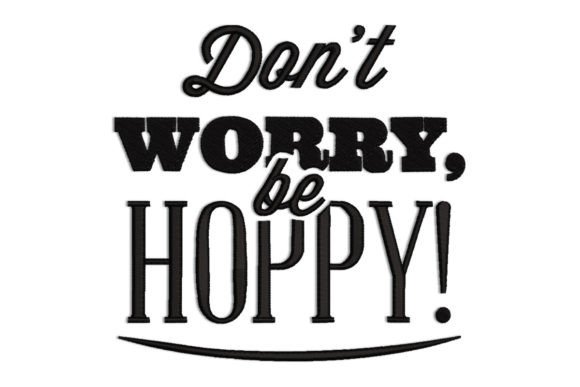
When Don’t Worry Be Hoppy popped up in my design queue for a client’s Easter boutique launch, I paused—not because it’s complicated, but because its charm is so immediate. It’s not fussy or overly detailed; it leans into clean, confident lettering with subtle bunny-ear curves on the “B” and “H,” plus a tiny carrot tucked into the “y.” The mood? Light, warm, gently cheeky—exactly what you want in a holiday pun that doesn’t try too hard. As a machine embroidery design, it reads well at 3–4 inches wide, making it ideal for tote bag fronts, pillowcase corners, or the chest of a relaxed-fit sweatshirt. It doesn’t scream “Easter”—it winks.
Real Project Test: That Tote Bag You’re Planning for Your Shop
Last week, I stitched Don’t Worry Be Hoppy onto a natural canvas tote for a local craft fair pop-up. Used medium-weight cutaway stabilizer, standard 40-weight rayon thread, and a 5×7 hoop. The result? Crisp satin-stitched outlines, smooth fill-stitch letters, and zero puckering—even on the slightly textured fabric. Customers stopped mid-aisle. One said, “That’s the kind of embroidery that makes me *want* to buy the bag, not just the message.” That’s the quiet power of this design: it elevates the handmade product without overwhelming it. It works because it’s legible, balanced, and emotionally resonant—not because it’s flashy.
Where It Shines (and Where It Needs Care)
Don’t Worry Be Hoppy performs especially well on:
- Custom apparel: Sweatshirts, crewnecks, and relaxed tees—its open letter spacing avoids crowding on knit fabrics.
- Tote bag design: Stitches cleanly across seams and handles when hooped flat and stabilized properly.
- Pillow covers & tea towels: The moderate stitch density holds up through repeated washing without stiffness.
- Baby embroidery: Soft curves and minimal fine detail make it safe and sweet on onesies or burp cloths (just confirm thread safety for infants).
- Embroidered patch: Clean edges and consistent line weight mean it’ll look sharp when heat-applied or sewn on.
But be thoughtful with:
- Small hoop sizes: Below 3 inches, the carrot detail and inner curves of the “B” and “H” risk losing definition—test before committing.
- Stretchy or thin fabric: Use tear-away + cutaway combo stabilizer; running stitch underlay helps anchor the design.
- Dark fabric: Opt for high-contrast thread—ivory or pale yellow pops beautifully against navy or charcoal, adding warmth without glare.
- Caps and curved surfaces: The layout isn’t inherently contoured, so repositioning and digitizing tweaks may be needed for professional cap embroidery.
What It Adds to Your Craft Business—Beyond the Stitch
As an Etsy seller and small shop owner, I judge designs not just by how they stitch—but by how they land with buyers. Don’t Worry Be Hoppy builds trust. Its tone feels human and intentional—not algorithm-generated or trend-chasing. That translates directly to perceived value: customers pay more for embroidered items that feel *designed*, not dropped-in. For personalized gifts, it’s versatile—pair it with a monogram or simple border and it reads as custom, not generic. For boutique branding, it fits seamlessly into spring collections without locking you into Easter-only sales. And yes—it photographs well. Whether you’re building printable mockups for your digital embroidery file listings or styling finished product shots, Don’t Worry Be Hoppy delivers clarity and character in every frame.
Designer Notes You’ll Actually Use
Before stitching your first Don’t Worry Be Hoppy project:
- Test on scrap fabric—especially if using textured, dark, or stretchy material.
- Check thread color contrast early: a light gray thread on oatmeal linen reads completely different than on black cotton.
- Review stitch density visually—no need to count stitches, but scan for areas where fill might feel heavy (like the base of the “B”) versus airy (the open counters).
- Confirm hoop size compatibility with your machine and intended placement—e.g., chest embroidery vs. back panel.
- Inspect small details at 200% zoom in your embroidery software: does the carrot stem hold? Are inner curves clean?
- Test in black-and-white mockups: if it reads clearly without color, it’ll work across fabric tones and lighting conditions.
- Use proper stabilizer—not optional. This design relies on clean edge definition, which depends on support.
- Verify licensing terms before selling finished items or reselling the digital embroidery file—commercial use isn’t assumed unless stated.
Final Thought: A Design That Serves the Maker
Don’t Worry Be Hoppy isn’t just another Easter embroidery file. It’s a quietly smart piece of design assets—balanced, adaptable, and emotionally tuned to real people buying handmade products. It works for the hobbyist stitching a gift for their niece, the apparel decorator building a spring capsule collection, and the Etsy seller refreshing their bestsellers list. It doesn’t ask for special treatment—just attention to fabric, stabilizer, and intent. And in a market flooded with over-digitized, over-complicated designs, that kind of respectful simplicity? That’s rare. And useful. And honestly—kind of hoppy.