Focus on the Good
A Friendly, Handmade Vibe That Builds Brand Trust
As an embroidery designer who’s digitized over 2,000 commercial projects for cafés, boutiques, florists, and handmade brands, my first impression of Focus on the Good is immediate: it feels warm, intentional, and authentically human. The title alone signals positivity—ideal for small businesses that want to communicate care without cliché. And with its description highlighting “manually digitized design and test stitched for quality assurance” plus “smiley faces are sketched embroidery,” I know this isn’t a generic clipart import. It’s crafted with intention—soft edges, organic line weight, and expressive charm. That sketch-like quality reads as handmade, not mass-produced—perfect for Etsy sellers, local studios, or craft-based brands aiming for approachability and sincerity.
Real-World Use Across Small Business Merchandise
Focus on the Good shines where personality meets practicality. On embroidered patches—especially woven or chenille-style—it becomes an instant brand signature: sewn onto tote bags for customer gifts, pinned to aprons at a neighborhood bakery, or ironed onto staff uniforms at a creative studio. Its balanced composition works beautifully at 2.5–3.5 inches wide, holding clarity whether stitched on cotton twill, canvas, or lightweight denim. As a chest logo on work shirts or a subtle sleeve detail on barista aprons, it adds warmth without overwhelming. For cap embroidery, place it cleanly on the front panel—its open spacing and moderate stitch density avoid puckering, even on curved surfaces like structured caps.
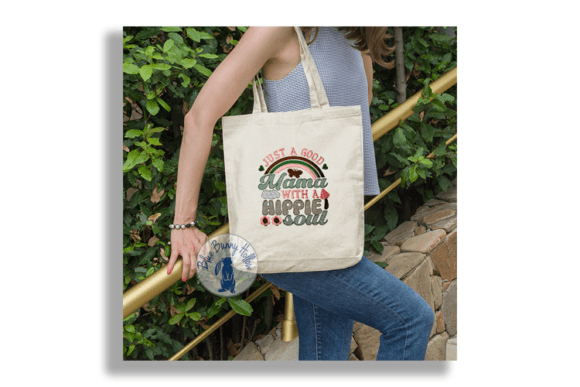
On tote bag designs, Focus on the Good serves double duty: it’s both a visual anchor and a conversation starter. Customers notice it, remember it, and associate it with uplifting values—critical for boutique merchandise or event merch where emotional resonance drives repeat engagement. As a product packaging accent (think stitched labels on soap wraps or linen pouches), it elevates perceived value while reinforcing brand identity through consistent tone and texture. And because it’s built for real-world wear—not just screen display—it holds up across wash cycles when applied to staff uniforms or reusable shopping totes.
Where to Apply Careful Judgment
While Focus on the Good is versatile, it demands thoughtful placement. Avoid scaling it below 1.75 inches for embroidered patches—those sketched smiley faces lose definition, and fine interior lines may vanish entirely. Cap fronts under 2 inches risk losing nuance; similarly, tightly curved areas like gussets or deep pocket flaps require extra stabilizer testing. Dark uniforms need high-contrast thread colors—test black thread on navy fabric before production, and consider white or buttercream for visibility. Textured fabrics (like heavy burlap or looped terry) may obscure delicate outlines, so always run a sample on the actual material—not just a swatch.
Also watch stitch density: though described as test-stitched for quality, manually digitized designs can vary in fill coverage. If your embroidery machine flags tension issues during sampling, reduce density slightly or adjust underlay—especially for high-volume runs. And never skip the hoop size check: confirm compatibility with your standard hoops before batching orders. A mismatch here causes misalignment on uniform sets, damaging consistency and professionalism.
How It Strengthens Your Brand Identity
Small businesses don’t just sell products—they sell feeling. Focus on the Good supports that mission by projecting authenticity, optimism, and craftsmanship. Unlike rigid, vector-perfect logos, its sketched embroidery aesthetic says, “We made this with care.” That builds customer trust faster than polished stock graphics. When used consistently—across aprons, tote bags, and staff caps—it creates visual rhythm and recognition. Shoppers begin to associate the soft smiley shapes and handwritten-style lettering with your shop’s voice, whether you’re a pet brand celebrating joyful moments or a florist highlighting everyday beauty.
It also raises perceived product value. A hand-stitched look implies attention to detail—even when machine-embroidered—and customers pay more for items that feel intentional. For Etsy sellers and handmade brands, that distinction is critical. Pair Focus on the Good with neutral thread palettes (oatmeal, slate, sage) and natural fibers, and you’ve got cohesive design assets that support storytelling, not distract from it.
Practical Designer Notes Before You Stitch
- Always test in black and white first—this reveals contrast balance and hidden density traps.
- Check legibility at your smallest intended patch size—if smiley details blur, simplify or resize upward.
- Review thread color contrast against your base fabric—especially for dark or heathered textiles.
- Inspect spacing between elements—tight kerning can cause thread nesting; allow breathing room for clean stitching.
- Confirm hoop size compatibility before digitizing adjustments or bulk production.
- Test on real fabric with proper stabilizer—no substitute for seeing how it behaves on your exact garment or patch substrate.
- Create a printable mockup for client approval—visuals prevent costly rework and build confidence in your process.
- Compare Focus on the Good beside your other design assets—does it align tonally with your logo, typography, and packaging?
- Verify commercial licensing before using on merchandise for sale—check terms at https www.creativefabrica.com product focus-on-the-good-163.
Remember: a great machine embroidery design doesn’t just look good—it performs. Focus on the Good delivers on both counts when matched with smart execution. Whether you’re embroidering for a local coffee roaster, launching a new line of handmade goods, or building branded apparel for your team, this digital embroidery file brings warmth, clarity, and quiet professionalism to every finished product.