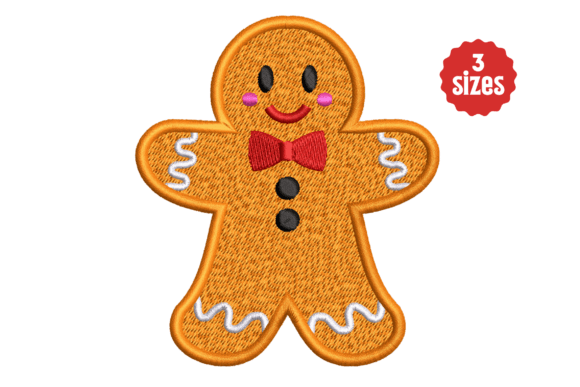
Bowtie Christmas Gingerbread Man
First Impression: Festive, Friendly, and Instantly Recognizable
As an embroidery designer who’s prepped over 200 craft fair booths, I can tell you—Bowtie Christmas Gingerbread Man lands with warmth and wit the second a shopper sees it. It’s not overly rustic, not aggressively modern, and definitely not minimalist. It’s festive with personality: playful enough for kids’ items, charming enough for adult gifting, and just detailed enough to feel handmade—not mass-produced. The bowtie adds instant character without clutter, and “Gingerbread Man” cues nostalgia while “Christmas” anchors seasonal relevance. No need to decode tone or intent—it reads clearly at 8 feet across a crowded market aisle.
Where It Shines: Craft Fair Product Placement That Converts
In my booth setup—featuring embroidered tote bags, aprons, tea towels, patches, fabric pouches, pillow covers, and small market bags—the Bowtie Christmas Gingerbread Man design performs strongest as a mid-size focal motif (3.5"–4.5") on structured, high-visibility items. On a natural linen tea towel? Yes—clean contrast, soft texture, and clear stitch definition. On a canvas tote bag? Absolutely—its cheerful shape stands out against neutral backgrounds and photographs beautifully for Instagram and Etsy listings. As an embroidered patch? Ideal—sturdy, portable, and instantly collectible for holiday gift sets.
It’s less effective as a tiny accent (under 2") on curved surfaces like baseball caps—tiny bowtie details risk blurring, and gingerbread facial features may soften on thick twill. Likewise, avoid dense terry cloth towels unless you’re using ultra-light stitch density and heavy cutaway stabilizer. For aprons, place it centered above the pocket—not near the waistband where fabric stretch distorts registration. Pillow covers? Perfect at 4"—large enough to read from across the room but not so big it overwhelms the fabric.
Production Realities: Batch-Friendly, But Not Blindly So
This is a commercial embroidery-ready machine embroidery design—if your file includes clean jump stitches, balanced thread colors, and moderate stitch density. It’s repeatable across dozens of units, but don’t assume uniformity. Test it on scrap fabric first: check how the bowtie’s satin-stitched edges hold up on textured weaves, confirm spacing between legs and arms doesn’t collapse on lightweight cotton, and verify that the gingerbread “icing” lines stay crisp—not fuzzy—on dark fabric.
For Etsy sellers and small shop owners: this design thrives in printable mockups. Its bold silhouette and friendly proportions translate cleanly into lifestyle photos—think a mug beside a gingerbread-man-embroidered tea towel, or a stack of pouches with coordinated thread palettes. Buyers respond to that cohesion. And yes—it elevates perceived value: a $22 tote bag becomes a $32 handmade product when paired with this kind of intentional, joyful design.
Careful-Use Notes Every Embroidery Designer Should Know
- Dense stitch areas: Bowtie center and icing swirls may pile up—confirm no thread nesting on your machine before batch runs.
- Tiny details: Eyes and mouth are likely small. At under 2.5", they’ll blur on textured fabrics—reserve smaller sizes for smooth poplin or satin.
- Dark fabric: Use light-thread contrast (cream, pale gold, or mint) to preserve readability—avoid white-on-black unless your file includes underlay stitching.
- Curved cap surfaces: Avoid unless you’ve tested hoop tension and stabilizer combo thoroughly. A slight pucker ruins the charm.
- Small sizes: Below 2", the bowtie loses definition and the gingerbread man reads as a blob—not cute, just unclear.
Booth Impact & Buyer Engagement: Why It Stands Out
At craft fairs, attention is currency—and Bowtie Christmas Gingerbread Man earns it through emotional resonance, not just aesthetics. Shoppers pause, smile, point, and say, “Oh! My niece loves gingerbread!” That micro-moment opens conversation, builds connection, and increases dwell time. Paired with consistent thread colors (think cinnamon brown + burgundy bowtie + ivory icing), it reinforces brand consistency across your entire table—even if you’re selling aprons, pouches, and patches side by side.
It also supports storytelling: “Hand-stitched embroidery files, digitized for clarity and wearability.” That phrase works because this design feels both nostalgic and well-engineered—not cutesy filler. Customers trust craftsmanship when the details hold up under close inspection: tight corners, even satin fill, no floating stitches.
Designer-to-Designer Checklist Before You Cut Fabric
- Test the embroidery file on scrap fabric matching your production material—especially for tea towel embroidery and apron embroidery.
- Check thread contrast on both light and dark fabric swatches—don’t rely on screen previews.
- Review spacing: ensure limbs don’t float too far from the body at larger sizes.
- Confirm hoop size compatibility—some versions may require 5x7" minimum; others scale down cleanly.
- Inspect stitch density: look for areas where satin stitch overlaps or fill layers may cause stiffness.
- Use appropriate stabilizer—cutaway for knits and terrycloth, tear-away for stable wovens.
- Create at least one real mockup—not just a digital preview—to assess drape, color harmony, and tactile appeal.
- Compare fabric colors side-by-side: does the gingerbread brown complement your base fabric, or compete with it?
- Verify commercial licensing terms—this is essential for any finished product you sell at markets or online.
Bottom line? Bowtie Christmas Gingerbread Man isn’t just another holiday embroidery file. It’s a craft fair workhorse—scalable, expressive, and emotionally intelligent. When executed with attention to fabric, stabilizer, and thread choice, it turns everyday items into memorable handmade products. And in a sea of generic snowflakes and reindeer, that’s exactly what makes a customer reach across the table—and remember your booth long after the fair ends.